Monday, 23 May 2016

PROPHETS AND THE PROPHETIC MANTLE


PROPHETS AND THE PROPHETIC


Prophetic Transition—Old Covenant to New
Under the old Covenant the prophets represented God in the earth. They spoke His Word and
did His Work. At any given time there were only a few that walked with God in this manner. If
you needed something from God, you had to find the prophet of God.
The way God speaks to us changed dramatically under the New Covenant.

Hebrews 1:1-2 NASB

(1) God, after He spoke long ago to the fathers in the prophets in many portions and in many ways,
(2) in these last days has spoken to us in His Son, whom He appointed heir of all things, through whom also He made the world.
Now, God has spoken to us through the Son. He has become our source of supply of all that we
need from God. Prophecy is even defined as it relates to Jesus.

Revelation 19:10 NASB

(10) Then I fell at his feet to worship him. But he *said to me, "Do not do that; I am a fellow servant of yours and your brethren who hold the testimony of Jesus; worship God. For the testimony of Jesus is the spirit of prophecy."
Under the new covenant prophecy can be divided into three categories all of which relate to
Jesus:
• What Jesus has done;
• What Jesus is doing, and
• What Jesus will do.
We have a process of how the Holy Spirit administrates the things of the Lord revealed in John
16: 13-15:
PROCESS: The Holy Spirit takes what belongs to Jesus and shows it to us.
Whatever the Holy Spirit hears, that’s what He speaks to us. The Holy Spirit is the administrator of what belongs to God and of what God says.
The Holy Spirit is the only channel of access to the council of the Godhead—he hears and brings it back to us.
1 Corinthians 2:9-13 NASB
(9) but just as it is written, "THINGS WHICH EYE HAS NOT SEEN AND EAR HAS NOT HEARD, AND which HAVE NOT ENTERED THE HEART OF MAN, ALL THAT GOD HAS PREPARED FOR THOSE WHO LOVE HIM."
(10) For to us God revealed t hem t hrough the Spirit; for the Spirit searches all things, even the depths of God.
(11) For who among men knows the thoughts of a man except the spirit of the man which is in him? Even so the thoughts of God no one knows except the Spirit of God.
(12) Now we have received, not the spirit of the world, but the Spirit who is from God, so that we may know the things freely given to us by God,
(13) which things we also speak, not in words taught by human wisdom, but in those taught by the Spirit, combining spiritual t houghts w ith spiritual words.

The Timeline of God

A “prophetic people” have to be able to express the heart and intention of God to the world in order to be classified “prophetic”. Which means that we first must understand His heart and intention or we won’t be able to express Him properly to others.
We also need to understand that God has a timeline for completing His purpose and that the times and seasons are expressions of the Father’s will. An example of this is the promise to Abraham about his descendants when the Lord “cut covenant” with him.

Genesis 15:13-14 NASB
(13) God said to Abram, "Know for certain that your descendants will be strangers in a land that is not theirs, where they will be enslaved and oppressed four hundred years.
(14) "But I will also judge the nation whom they will serve, and afterward they will come out with many possessions.
It was in God’s timeline that Abraham’s descendants would be in bondage for 400 years and then He would bring them out by sending Moses as a deliverer. We see from this that the stream of God’s purpose flows through history and as God raises up prophets or prophetic people, they must stand in the stream of His purpose just as others did before them.
As the Lord uses people to reveal or accomplish His purpose, each one He uses stands directly in the stream of those used previously by the Lord. This gives us a continuity of the fulfillment of the purpose of God. Any prophetic person should understand the stream of God and how their work fits with those who went before. Those who don’t understand this become “prophetic loose cannons” and hinder or even divert the purpose of God.
To understand our place in the stream of God, we must understand the purpose of the Father and the timeline of God. All work of the Lord, which has been assigned to us, is woven into the fabric of God’s eternal purpose.


The Prophetic Walk
Prophetic people are naturally supernatural. Their walk in the Spirit is a peaceful, natural expression of the Life of the Lord and as different situations are encountered, the power of the Spirit is shown in a most natural way. The Holy Spirit may be manifested in a simple manner or in a dramatic powerful display of the magnificence of the Lord.
The personality characteristics that are inherent in one called prophetically are challenging to others. Those called as prophets usually have a “hard core” personality—they are usually abrasive to others. They tend to speak in absolutes without any apparent mercy or compromise.
As a consequence, there is a measure of conflict expressed in their relationships. Because of this, others begin to distance themselves from them, which results in the prophetically called becoming loners with feelings of alienation, being on the outside looking in, feeling like a “fifth” wheel when around other people. This cause the prophetically called to withdraw into themselves, which is a great mistake. Deep within all of those who are prophetically called (at least all that I have known, including myself) is a core identity problem that is expressed as insecurity and/or a need for approval.
There is a danger in one becoming a false prophet when the need for the approval and acceptance of men override the acceptance and approval of the Lord. A prophetically gifted person must learn to be absolutely unshakable in who he is in the Lord. He must learn to separate people's response to any prophetic word that he might give from his own identity. We must allow people to reject a word without accepting it as a rejection of ourselves.
God did not design any of us to be loners, including prophetic people. While we may be alone for a season, we are not to isolate ourselves on a long term basis. The Holy Spirit works in us to cause us to desire to be with other believers in order to give and receive of the life of the Lord and the fellowship of the Spirit. However, many prophetic people do seem to live their lives as loners. This is because others, through not understanding the working and gifting of the Spirit, have hurt them deeply and they have withdrawn themselves from close fellowship.
We receive our prophetic gifting in seed form. Seeds have very little resemblance to the full grown plant. Anyone looking at a two-week-old fetus would never be able to describe what the full-grown person would look like. Likewise, we can’t take a tadpole out of the water, place it on land and say to it, “you’re a frog, so jump”. There must be a growth process that causes the tadpole to grow legs and be able to breath air.
So it is with the prophetic—there must be a growth process, which takes time. There is no such thing as “instant spirituality”, even for one who is gifted by the Holy Spirit and who has a call upon his life for ministry.

Three Aspects of the Prophetic
Learning to walk in the supernatural is a learned process. It takes time for us to grow properly in
consistency and in veracity of the prophetic.
1. The general or basic prophetic function
The gifts of the Spirit are something that Paul told us that we should desire; but the prophetic
aspect is so needed by the Church that Paul told the Corinthians to desire it more than the other
gifts.
1 Corinthians 14:1 NASB
(1) Pursue love, yet desire earnestly spiritual g ifts, but especially that you may prophesy.
The gifts of the Spirit are not our “play toys” nor are they medals of spirituality that we wear on
our chests. This type of thinking is carnal. All manifestations of the Spirit are given to build up
the Body, and we who exercise the gifts do so for the profit and well being of our fellow
believers.
1 Corinthians 12:7 NASB
(7) But to each one is given the manifestation of the Spirit for the common good.
The Greek word for “common good” is sumphero; derived from Strong's # G4862 and G5342; and means to bring together, to be profitable. The gifts aren’t given to us for personal use but we are to bring them together with others and contribute what the Lord has provided so that others may be edified for the common good.
The first aspect of the prophetic is available to everyone and should function without strain or
effort in every gathering of believers.

1 Corinthians 14:31 NASB
(31) For you can all prophesy one by one, so that all may learn and all may be exhorted;
Every Spirit-filled believer may prophesy. This is the beginning of prophetic training and for some will provide a foundation for further growth in the other areas of the prophetic or other gifts of the Spirit.
This level of the prophetic has strict limits for the types of prophecy given.
1 Corinthians 14:3 NASB
(3) But one who prophesies speaks to men for edification and exhortation and consolation.
We are to edify, exhort and console the other believers. The root word used here for edification is an architectural word, which basically means to build up. Every one of us needs to be built up, strengthened, and established on a solid foundation. In the same way we need to be exhorted to do the will of God, to yield to His dealings, and to not compromise His call on our lives. And, on occasion, we all need to be consoled and comforted, to know that God loves us and has not forsaken us.
We are told that the operation of the Spirit in this way is not something that should be stopped, squelched, or despised.
1 Thessalonians 5:19-20 NASB
(19) Do not quench the Spirit;
(20) do not despise prophetic utterances.
Prophecy can become so common that it makes no impact upon us. Even so, we must remember that it is the Holy Spirit speaking to us through the filter of people and not allow ourselves to take it for granted nor think too little of the words brought or the ones through whom they come.
2. Prophetic ministry
Besides the general use of the gifts, I see two characteristics of prophetic ministry:
• Intercession, and
• Worship
The intercessors generally are a part of the “watchman” functions of the Old Testament prophets (there are two types or categories).They are dependent upon the Holy Spirit to direct their prayers and bring revelation of the will of God for specific prayer warfare. (There is a third type, but I consider it a bridge between the prophetic ministry and the function of a Prophet, so it will be discussed later in the lesson.)
The Lookouts
The first watchman category is the Lookout type. These watchmen were on the walls of the city so that they could see anyone approaching the gates of the city. They reported any sightings to the Elders, which sat at the gates. Normally, the watchman only reported (sometimes it was obvious that it was a war party, in which case, he blew the trumpet). Any action to be taken was not his decision. The Elders decided on the action; whether those approaching were friend or foe; whether to close the gates or leave them open, etc.

We need Lookout Intercessors who can see into the spiritual world; who watch and pray and report back on what they receive in their spirits.
The Harvest Watchers
The second watchman category is the Harvest watchman. Small towers were built in the middle of the vineyards and fields. Watchmen stayed in these and watched for thieves, wild animals, fires, locusts, etc. They would sound an alarm if anything threatened the future harvest. As the crops matured, they also watched for the ripened fruit.
We need intercessors who watch and pray over the assembly, always on the lookout for thieves, or demonic “wild animals”, or other threats to the well-being of the body.
The Worshipers
The other category of prophetic ministry is that of worshipers. While we all worship, there are some that the Holy Spirit anoints especially for worship. A worshiper is not doing anything for the Lord, or with the Lord, but is ministering unto the Lord. Worship is a function of the spirit and is spirit-to Spirit, not soul-to-Spirit. Look at the scenes in Heaven in Revelation and read the expressions of worship by those in attendance in the Throne Room of God.
We need prophetic worshipers who can, under the anointing of the Holy Spirit, express to God the fullness of our adoration and love for the Lord. But we also need prophetic worshipers and intercessors that pray the type of prayers that are mixed with incense on the Golden Altar before
God.

Revelation 5:8 NASB
(8) When He had taken the book, the four living creatures and the twenty-fourelders fell down before the Lamb, each one holding a harp and golden bowls full of incense, which are the prayers of the saints. Revelation 8:3-4 NASB
(3) Another angel came and stood at the altar, holding a golden censer; and much incense was given to him, so that he might add it to the prayers of all the saints on the golden altar which was before the throne.
(4) And the smoke of the incense, with the prayers of the saints, went up before God out of the angel's hand.
These are “prophetic prayers” because they are part of the completing of the purpose of God as
His judgment comes on the lawless.
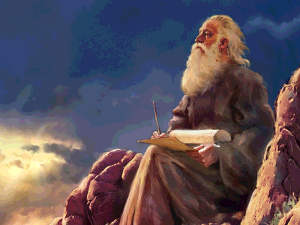

3. Prophets
New Testament prophets are different than Old Testament prophets. Also, a prophet is different than one who prophesies. One can prophesy regularly and still not be a prophet. Paul said that all may prophesy one by one. He said that we all should desire to prophesy so that the Church could be edified. Prophesy should be universal in the Body of Christ because the testimony of Jesus is the spirit of prophecy as mentioned earlier in the lesson. Yet, Paul clearly says that all are not prophets.
1 Corinthians 12:29 NASB
(29) All are not apostles, are they? All are not prophets, are they? All are not teachers, are they? All are not workers of miracles, are they?
The answer to each of these questions is clearly no. Then, what is the difference between prophesying and being a prophet?


The gift of prophecy is a gift of the Holy Spirit to a person.
1 Corinthians 12:7-10 NASB
(7) But to each one is given the manifestation of the Spirit for the common good.
(8) For to one is given the word of wisdom through the Spirit, and to another the word of knowledge according to the same Spirit;
(9) to another faith by the same Spirit, and to another gifts of healing by the one Spirit,
(10) and to another the effecting of miracles, and to another prophecy, and to another the distinguishing of spirits, to another various kinds of tongues, and to another the interpretation of tongues.
The gift of a Prophet is a gift of Jesus to His People—His Church.
Ephesians 4:11 NASB
(11) And He gave some as apostles, and some as prophets, and some as evangelists, and some as pastors and teachers,
Commonly called the 5-fold Ministry, these are gifts of men to the Body. Some call these offices but I think it better to call them functions. When we speak of offices it reminds me of an organization but when we speak of functions it is more in the manner of an organism. We do not all have the same function, but there is a diversity of function so that corporately we can manifest the full ministry of Jesus in the earth.
Each function is an aspect of the ministry of Jesus. The Apostle is Jesus manifesting His ministry as the Apostle of the Father though a person. The Prophet is Jesus manifesting His ministry as a Prophet  through a person and so it is with Evangelist, Shepherd and Teacher.
Since these functions are people, we can think of them as callings. As a matter of fact, I believe that these are what Paul referred to as the “high calling” of Jesus. While we are born into the Family, we are called to work and some are even called to a “higher” work.
We become children of God by the grace of the Lord Jesus Christ. We can do nothing to earn our position in Christ. However, the work he has called us to do is a different matter. We have to be trained properly for work. In other words we have to “qualify” for work and if that is true, we can also be “disqualified”.
Paul speaks of this in relation to himself (that should make us pause and think!).
1 Corinthians 9:27 NASB
(27) but I discipline my body and make it my slave, so that, after I have preached
to others, I myself will not be disqualified.
The word for “disqualified” means “unapproved”, “rejected” or “worthless” (Strong’s # G96) Paul used sports terminology to show that we needed training and discipline in order to do the work that He called us to do. Without training and discipline we could become worthless and unapproved for the work.
Peter said it this way:
2 Peter 1:8 NASB
(8) For if these qualities are yours and are increasing, they render you neither
useless nor unfruitful in the true knowledge of our Lord Jesus Christ.
In the original, this is the word for “useless” (Strong’s definition):

G692 “argos” From G1 (as a negative particle) and G2041; inactive, that is, unemployed; (by implication) lazy, useless: - barren, idle, slow.
If the qualities that Peter is telling us about are developed in us, then we will be employed in the
Kingdom of God; we will not be inactive.
The 5-fold ministry functions are “employment opportunities”. Jesus has pre-selected (called, elected) some for these functions. But those so called must mature or grow into them.
Most of the clearly seen functions of the Old Testament Prophet have been divided and diffused, dispersed and distributed among the people of God by the Holy Spirit under the New Covenant.

What, then, does a New Testament Prophet do?


What a Prophet Does
One function of a prophet grows out of the Intercessor Ministry and that is a watchman after the
manner of Ezekiel. I call this type a Prophet of Repentance. His job is to warn the people of
approaching judgment from the Lord and their need of repentance. He must so identify with the
people that to not warn them would cause him to incur the judgment along with them. This is
part of his motivation.
Ezekiel 3:17 NASB
(17) "Son of man, I have appointed you a watchman to the house of Israel; whenever you hear a word from My mouth, warn them from Me.
To me, the Repentance Prophet is what is needed in the American Church and the African church and in terms of our corporate walk one of the most valuable functions of the prophetic for the purity of the Church.
I believe that most of the New Testament Prophet’s work relates to the corporate expression of  Christ and to the fulfilling of God’s purpose according to His timeline. Usually, instead of individually focused words of the nature of the general or basic prophetic functions of the Holy Spirit, New Testament Prophets are more concerned with
1) the overall plan of God,
2) the key events of His timeline, and
3) calling of His workers.
Reasons for the prophetic:
• Exhort and confirm (Acts 15:32)
• Minimize unbelief ( I Cor. 14:24-25)
• Eliminate boredom—provide fresh anointing

The Place of the Prophet


The place and function of a Prophet plays a key role in the purposes of God. They form part of
the Church foundation along with the apostles and Jesus Christ.
Ephesians 2:20-21 NASB
(20) having been built on the foundation of the apostles and prophets, Christ Jesus Himself being the corner stone,
(21) in whom the whole building, being fitted together, is growing into a holy temple in the Lord,
These scriptures are not talking about the Old Testament prophets because the apostles are
mentioned first. When referring to the Old Testament, the scriptures usually say “the law and the
prophets”.
It is to the apostles and prophets that God reveals His mysteries. They then make those known to
the rest of the people of God.
Ephesians 3:5 NASB
(5) which in other generations was not made known to the sons of men, as it has now been revealed to His holy apostles and prophets in the Spirit; God has set an order of importance (of function not value) in the Church, which puts the apostles, prophets, and teachers at the head of the list.
1 Corinthians 12:28 NASB (28) And God has appointed in the church, first apostles, second prophets, third teachers, then miracles, then gifts of healings, helps, administrations, various kinds of tongues.
The meaning of “appointed”: Strong's #G5087, tithemi; to place, lay, set: it is translated in the
NASB as “appointed (6), assign (2), committed (1), conceived (1), destined (1), down *(4),
falling (1), fixed (1), kept (1), kneeling *(2), knelt *(3), laid (22), laid aside (1), laid down (1),
lay (4), lay...down (2), lay down (8), laying (2), lays down (1), made (4), make (4), offer (1),
placed (4), present (1), purposed (1), put (15), puts (2), puts...away (1), putting (1), reached (1),
serves (1), set...down (1), set down (1), sink (1)”.
This word is translated 22 times as “laid”. When read this way “God has laid in the church...” it
gives us a different understanding than we may have previously entertained. This fits with the
idea of the apostles and prophets as part of the foundation. When a “church” is built, the order
of ministry that is required to be laid in the “church” is first the apostles, second, the prophets,
thirdly, the teachers, then miracles, etc.
Giving and Receiving Prophecy
When giving or receiving prophecy there are three areas that need to be considered by both the
one giving the word and the one receiving it:
1. Revelation, (raw data)
2. Interpretation, and
3. Application.
The one who is prophesying may have a correct revelation but while giving it may interpret it in an incorrect manner or the one receiving the word may also interpret it incorrectly. If you do this it will cause a correct word to be perceived as an incorrect word.
Even if the first two steps occur correctly, many times the word will be applied to our life circumstances incorrectly. Usually, this happens in the area of timing. Many words may not be applicable to your situation until a future time or set of circumstances.
Timing is the hardest area for one who is prophetically called to deal with because our tendency is to think that everything is for “right now”. For a prophetic word to have impact it must be a revelation from the Holy Spirit which is correctly interpreted and expressed at the correct time
according to the plan and purpose of the Lord.

Tests of Prophetic Relationship to the Lord

There are six character areas in the prophet that must be purified and consecrated to the Lord before the Lord can fully release the prophet into the fullness of his ministry. The Lord will put these areas to the test until they acceptable to Him. (I have grouped these in pairs that go together in the way the Lord works on us).
• Surrender and consecration: willingness to speak the hard word and accept the persecution and reproach that results from its delivery.
• Honesty and integrity: ability to remain silent when God has not spoken regardless of the apparent need of the moment.
• Maturity and security: willingness to be silent when God has spoken or given revelation but requires you to keep quiet about it.
Before maturing a prophet has to pass all of these tests. Many times prophetic people act like a child who has a secret and can’t wait to tell it to someone. Another problem area is the tendency to always want to get the credit for God speaking—almost, a “I told you so” syndrome.
As you begin to move in the prophetic, there are three areas that must be addressed quickly.
• Timing—not only must the word be a correct word from the Lord, it must be delivered at the correct time and in the appropriate place. Timing is difficult because prophets tend to be task-oriented people. They want to accomplish the goal. They put agendas before relationships. Rather than wait on the proper time, they want to give the word and move on.
• Harshness—there is a tendency for those newly moving in the prophetic to give harsh words, full of doom and gloom. Consider the heart of the Lord and deliver the prophetic with the proper emotions. Don’t make the mistake of Moses when he was angry with the people and God wasn’t.
• Pride—we puff up very quickly. Just remember, God can speak through any Ass—just like He did to Balaam!
Prophetic people tend to wear themselves out. Jeremiah gives us an important perspective.
Jeremiah 12:5 NASB
(5) "If you have run with footmen and they have tired you out, Then how can you compete with horses? If you fall down in a land of peace, How will you do  in the thicket of the Jordan?
There are some important lessons here. First, we should evaluate ourselves and not extend into areas for which we don’t have the strength or stamina. Second, we need to find our “cruising speed”—the pace that doesn’t wear us out. Third, expect the Lord to provide ways of strengthening or increasing our abilities in order to accomplish His work.

CAUTIONS
CAUTION: POTENTIAL PROBLEM AREAS

Prophetic people (those who are open to being used by the Holy Spirit) typically will have one of
two basic problems that hinder them from contributing to the Body.
• Inferiority—In the twelfth chapter of Corinthians Paul speaks of those who would say that because they weren’t the hand, or the ear, or the eye then they weren’t a part of the Body. We look at others and their function in the Body and our feelings of inferiority cause us to believe that because we don’t have the same function as others then we must not be a part.
• Superiority—In this same chapter Paul goes on to speak of the other side of the problem. The eye can’t say to the hand, “I have no need of you.” This is one of the greatest dangers to one who is prophetically gifted. Pride causes them to begin to feel superior to the other members of the Body and that they don’t need them to be “spiritual”.
NOTE: God is no respecter of persons. If either of these attitudes is loose in the assembly then the Holy Spirit will shut off the flow of the gifts and His anointing.
CAUTION: POTENTIAL PROBLEM AREAS
These problem areas are applicable to both the prophetic ministry and to the Prophets and are
presented as a combined list.
• False spirituality: The person assumes a persona that he believes to be the way a “spiritual” person would look and act. As a consistent expression of the prophetic, they can take on a “wild-eyed” expression, speak in a deep resonant voice, utilize “spiritual language”, that is, “Thus saith the Lord God” in King James English, and raise their voices in loud declaratory shouting. While at times, some of these things may be appropriate; they should not be the norm.
• Always right: Because the person is hearing from God, he will begin to take a stance of always being right, hearing right, and speaking right. They forget that we hold the treasure in an earthen vessel.
• Uncorrectable: This is a result of the “always right” problem. Once a person believes that he is right, it becomes very difficult for them to receive anything that would differ from their perception.
• Clone syndrome: “If you were really close to the Lord like I am, you would be doing the same thing that I am doing (and doing it the same way)”. God doesn’t produce clones; He produces sons and daughters.
• Gifts = character: This becomes an incorrect assumption among prophetic people. Gifts are just that—gifts. They are not earned nor bestowed as an act of approval. Character development is a requirement of maturing in God. It doesn’t matter how many nor how powerful the gifts, we are not excused from the proper development of godly character.
• Gifts = doctrinal accuracy: This problem is a corollary of the one above and is very dangerous to the Church. Gifted and prophetic people make the incorrect assumption that God has put His stamp of  approval on their doctrine. For some reason, Prophets always want to operate in other gifting areas when they are not called in that manner. The result is muddled, confused, and erroneous teaching
that leads many astray from the purposes of God, which causes hurt, bitterness, and unforgiveness..
• Gifts = maturity: Gifts of Grace are given to all levels of maturity. They are not merit badges, nor earned by consecration. Sometimes this will encourage some to “fake it” so as not to appear un-gifted.
• Anointing hype: Methodology or style does not produce anointing. Neither gifts nor anointing are a divine endorsement of ministry style. The anointing is not dependent upon mood or atmosphere. Methodology becomes a prop and leads to hype and exaggeration. We desire to never look weak; however, Paul delighted in weakness (see 2 Cor. 9-10).
• High mindedness: Prophetic people need to guard against becoming high minded and thinking more highly of themselves than they should. Most prophetic people do not have a gift of leadership, which is why the scriptures link prophets with apostles. It is usually a mistake for the prophetically gifted to lead the prophetically gifted. When this happens there is no balance to the prophetic. A leader of prophetically gifted people needs to understand the gifting and operation of the prophetic, but doesn’t necessarily need to be a prophetically gifted person himself. It is desirable for them to not be in order to add balance to the prophetic group.
                                                                                                    SCHOOL OF THE SPIRIT
© 2004 Art Nelson Lifestream Teaching Ministries-

Thursday, 28 April 2016

AGAPE LOVE


                                                   LOVE THE MOST EXCELLENT WAY
                                                 ( PERFECT LOVE EMBODIED IN JESUS)
1Jn 4:7  Beloved, let us love one another: for love is of God; and every one that loveth is born of God, and knoweth God.

1Jn 4:8  He that loveth not knoweth not God; for God is love.

THE Children of Light, who abide in the Kingdom of Heaven, see the universe, and all that it contains, as the manifestation of one Law — the Law of Love. They see Love as the moulding, sustaining, protecting, and perfecting Power immanent in all things animate and inanimate. To them Love is not merely and only a rule of life, it is the Law of Life, it is Life itself. Knowing this, they order their whole life in accordance with Love, not regarding their own personality. By thus practising obedience to the Highest, to divine Love, they become conscious partakers of the power of Love, and so arrive at perfect Freedom as Masters of Destiny.

The universe is preserved because Love is at the Heart of it. Love is the only preservative power. Whilst there is hatred in the heart of man, he imagines the Law to be cruel, but when his heart is mellowed by Compassion and Love, he perceives that the Law is Infinite Kindness. So kind is the Law that it protects man against his own ignorance, Man, in his puny efforts to subvert the Law by attaching undue importance to his own little personality, brings upon himself such trains of suffering that he is at last compelled, in the depth of his afflictions, to seek for Wisdom; and finding Wisdom, he finds Love, and knows it as the Law of his being, the Law of the universe. Love does not punish; man punishes himself by his own hatred; by striving to preserve evil which has no life by which to preserve itself, and by trying to subvert Love, which can neither be overcome nor destroyed, being of the substance of Life. When a man burns himself, does he accuse the fire? Therefore, when a man suffers, let him look for some ignorance or disobedience within himself.

Love is Perfect Harmony, pure Bliss, and contains, therefore, no element of suffering. Let a man think no thought and do no act which is not in accordance with pure Love, and suffering shall no more trouble him. If a man would know Love, and partake of its undying bliss, he must practice it in his heart; he must become Love.

He who always acts from the spirit of Love is never deserted, is never left in a dilemma or difficulty, for Love (impersonal Love) is both Knowledge and Power. He who has learned how to Love has learned how to master every difficulty, how to transmute every failure into success, how to clothe every event and condition in garments of blessedness and beauty.
The way to Love is by self-mastery, and, travelling that way, a man builds himself up in Knowledge as he proceeds. Arriving at Love, he enters into full possession of body and mind, by right of the divine Power which he has earned.

"Perfect Love casteth out fear." To know Love is to know that there is no harmful power in the whole Universe. Even sin itself, which the worldly and unbelieving imagine is so unconquerable, is known as a very weak and perishable thing, that shrinks away and disappears before the compelling power of Good. Perfect Love is perfect Harmlessness. And he who has destroyed, in himself, all thoughts of harm, and all desire to harm, receives the universal protection, and knows himself to be invincible.

Perfect Love is perfect Patience. Anger and irritability cannot dwell with it nor come near it. It sweetens every bitter occasion with the perfume of holiness, and transmutes trial into divine strength. Complaint, is foreign to it. He who loves bewails nothing, but accepts all things and conditions as heavenly guests; he is therefore constantly blessed, and sorrow does not overtake him.
Perfect Love is perfect Trust. He who has destroyed the desire to grasp can never be troubled with the fear of loss. Loss and gain are alike foreign to him. Steadfastly maintaining a loving attitude of mind toward all, and pursuing, in the performance of his duties, a constant and loving activity, Love protects him and evermore supplies him in fullest measure with all that he needs.
Perfect Love is perfect Power. The wisely loving heart commands without exercising any authority. All things and all men obey him who obeys the Highest. He thinks, and lo! he has already accomplished! He speaks, and behold! a world hangs upon his simple utterances! He has harmonized his thoughts with the Imperishable and Unconquerable Forces, and for him weakness and uncertainty are no more. His every thought is a purpose; his every act an accomplishment; he moves with the Great Law, not setting his puny personal will against it, and he thus becomes a channel through which the Divine Power can flow in unimpeded and beneficent expression. He has thus become Power itself.
To the eye of Love all things are revealed, not as an infinity of complex effects, but in the light of Eternal Principles, out of which spring all causes and effects, and back into which they return. "God is Love;" therefore than Love there is nothing more perfect. He who would find pure Knowledge let him find pure Love.
Perfect Love is perfect Peace. He who dwells with it has completed his pilgrimage in the underworld of sorrow. With mind calm and heart at rest, he has banished the shadows of grief, and knows the deathless Life.

If thou wouldst perfect thyself in Knowledge, perfect thyself in Love. If thou wouldst reach the Highest, ceaselessly cultivate a loving and compassionate heart.

TRANSMISSION AND GLORIOUS RECEPTION OF MANTLE


2Ki 3:11  But Jehoshaphat said, Is there not here a prophet of the LORD, that we may enquire of the LORD by him? And one of the king of Israel's servants answered and said, Here is Elisha the son of Shaphat, which poured water on the hands of Elijah. 
2 Kings 3:11

Elisha . . . which poured water on the hands of Elijah.

Contrast between Elijah and Elisha

The resemblances between Elijah and Elisha are occasionally so great, that it is scarcely surprising the one prophet is confused with the other. They both lived in one country and in one age. They were both the messengers of God to kings. They both wrought miracles, and even the same class of miracles, multiplying the widow’s off, and raising from the dead a mother’s only child. Last of all, the life-work of both was to withstand and witness against idolatry, and restore the worship of the true God in the land of Israel. And yet to the careful reader there is no contrast in the Bible more striking or complete. What John was to Peter, Mary to Martha, Melanchthon to Luther, that was Elisha the Prophet of Peace to Elijah the Desert Prophet—the Prophet of Fire. The one is John the Baptist, the other is the gentler John—the Evangelist, the disciple of love—who, leaning on his Master’s bosom, caught and breathed a kindred spirit. In place of the long shaggy locks that had marked the awful Elijah, the head of the new and youthful prophet was shorn and smooth. Instead of the sheepskin mantle, he wore the attire of the period. In his hand he carried a walking staff. His whole gait was that of the ordinary citizen. Elisha was no lonely man dwelling in the grot of Cherith or the solitudes of the wilderness. He had his own house in Samaria. He was known in far Damascus. Indeed the whole contrast between Elijah and Elisha is so significant and instructive as to be well worth following from point to point.
1. Elijah simply drops upon the scene. There is no warning, no period of pupilage or preparation. Of his previous history nothing whatever is known. Like Melchisedec he has neither “beginning of days nor end of life.” We meet Elisha, on the other hand, for the first time in his father’s fields, in “the meadow of the dance,” at Abel-meholah. Shaphat is a man of means, for he has twelve ploughs at work; a man of piety also, for he has refused to do homage at the shrine of Baal. In particular, he has trained his son to know Israel’s God.
2. During the whole of his public life—about twelve years at the most—Elijah to a large extent lived out of the world, or at least far above it, in stern sublimity. Elisha, on the other hand, is intimately mixed up with all the political movements and events of his day. Three kings seek him as their counsellor. Jehu is crowned at his bidding. Ben-hadad consults him in war. Joash attends at his death-bed. Whenever Elijah is seen in connection with kings and courts, it is always as their enemy—Ahab, Jezebel, Ahaziah. When Elisha is seen in the same connection, it is always as their friend—“My father, my father,” is their uniform and reverent mode of address.
3. The miracles wrought by the two prophets form another interesting point of contrast between Elijah and Elisha. It is noticeable that Elisha wrought twice as many miracles as Elijah did, suggesting the inference that the parting request had been complied with to the letter: “And Elisha said, I pray thee let a double portion of thy spirit be upon me.” On his introduction to work, Elijah begins with a miracle—the emblem of so much of his future career—a miracle of judgment: “There shall not be dew nor rain these years,” referring to the drought, “but according to My word.” Elisha begins with a miracle—the emblem also of so much of his future career—but it is a miracle of mercy: “There shall not be from thence,” speaking of the bitter waters of Jericho sweetened, “any more death or barren land.” The miracles of Elisha, in fact, remind us very much of the miracles of Christ—miracles of beneficence. The very grave of Elisha wrought a miracle that reads very like a miracle of Christ, for “when the man was let down and touched the bones of Elisha, he revived and stood up on his feet.”
4. As another point in the contrast between Elijah and Elisha, it cannot be out of a place to say that of Elisha, like Joshua the son of Nun, not a single infirmity or failing is recorded. This cannot be said of Elijah, for he fled into the wilderness and lay down under the juniper tree to escape a woman’s vengeance, and in despair to die. The humbler Elisha may do the greater work. There is every reason to believe that in reclaiming Israel from idolatry, by the conversion of individual men and women, the “still small voice” of Elisha, conjoined with his healing acts and social intercourse, accomplished wider and more permanent changes than the fire and storm and national upheaval caused by Elijah. Nor is this to be wondered at. The ministry of Elisha in Israel lasted nearly five times longer than the ministry of Elijah. The rough and pioneer work had already been done.
5. The translation of the one, the ordinary death by dissolution of the other. In conclusion, the whole career of Elisha supplies us with some serious and useful practical lessons. His special feature of character was this—holiness. He was “a holy man of God.” What a sublimity there is in this simple language! What honour or title is ever to be compared with it? Abraham was “the friend of God,” David was “the man after God’s own heart,” Daniel was “the man greatly beloved,” Elisha is “the man of God.” All social distinctions that count so much with men sink here into insignificance. Whatever else we are honourably known to be, let us seek to “be holy even as God is holy.” Nearer, my God, to Thee, nearer to Thee.” (H. J. Howat.)


The present ministry
A young man, who a few years ago was a student of Harvard College, became noted for his quiet offices of kindness, religious and otherwise, among the younger students. Without patronage, he seemed to adopt the role of eider brother to many a boy who, but for him, would have gone wrong and reaped the consequences. Some one asked a question one day, and drew out the secret. He had confided to his pastor his determination to “enter the ministry” as soon as he had graduated. “why not enter it now?” said the wise counsellor. “You will be all the better minister for ministering as you go along.”

Tuesday, 26 April 2016

CONTENDING FOR THE FULLNESS OF OUR BLESSING IN THE KINGDOM


The Sword of the Spirit. Use it often.

“And take the helmet of salvation, and the sword of the Spirit, which is the word of God:” (Ephesians 6:17)
The sword of the Spirit is the anointed word of God. This is the weapon that puts every wicked spirit running. It is written that the word of God is alive, powerful, and sharper than any two-edged sword, piercing… (Hebrews 4:12). In other words, the anointed word of God is unstoppable. Of all the parts making up the armor of God, the anointed word of God is your only offensive weapon. All the others were given for protection.
Every spiritual warrior understands the anointed power of the word of God.
It’s significant that Paul calls the word of God the sword of the Spirit. This is because it is the anointing on the word of God that gives it power. Paul wrote, “And my speech and my preaching was not with enticing words of man's wisdom, but in demonstration of the Spirit and of power: That your faith should not stand in the wisdom of men, but in the power of God” (1 Corinthians 2:4-5).
There was a time when Jesus, the Word incarnate, walked the earth with no anointing. There were no miracles, healings, rebuking storms, raising the dead, turning water into wine, or casting out devils. Even though Jesus was always God, it wasn’t until the anointing of the Holy Ghost came on him at the River Jordan that there were any supernatural manifestations of the power of God. “And it came to pass in those days that Jesus came from Nazareth of Galilee, and was baptized of John in Jordan. And straightway coming up out of the water, he saw the heavens opened, and the Spirit like a dove descending upon him: And there came a voice from heaven, saying, Thou art my beloved Son, in whom I am well pleased” (Mark 1:9-11). Jesus, the Word made flesh, did not anoint himself. Jesus was anointed by the Holy Ghost.
After Jesus had been anointed, the Holy Spirit led him into the wilderness being tempted by the devil for forty days. Christ met every temptation with a statement you will do well to remember, “It is written!” Notice Christ did not ignore Satan. He confronted him with Scripture.
Some consider the anointing of the Holy Spirit solely for blessing, but the anointing is also for spiritual confrontation. When the enemy challenges you, grasp the sword of the Spirit, speak the Word with boldness and command him to get under your feet where he belongs.
Use the Name of Jesus. Scripture says, “God hath highly exalted him (Christ), and given him a name which is above every name: That at the name of Jesus every knee should bow, of things in heaven, and things in earth, and things under the earth; And that every tongue should confess that Jesus Christ is Lord, to the glory of God the Father” (Philippians 2:9-11). When you speak the word of God, every demonic power has no choice but to obey.
When God wants to bless you, he will bring someone into your life. This is what I call divine appointments. Divine appointments are meetings arranged in advance by the Holy Spirit with someone you need to meet. This means you are only one conversation away from a mighty miracle.
 Have you ever felt like your life plateaued? Your ministry was growing, increasing, and expanding, but, after a while leveled off. What happened? Sometimes it seems there is an invisible lid over our lives. That lid seems to determine how much money you can make, where you can live, your scope of influence, and many other things. A plateaued life is frustrating because you know the gift of God in you should be producing more than you see right now.
Most of us are walking in the last revelation the Holy Spirit gave them. Revelation is important to the disciple of Christ. We grow and move from level to level spiritually because of our relationship with the Holy Spirit. One of the Holy Spirit’s ministry functions is to show you things to come. Scripture says, “Howbeit when he, the Spirit of truth is come he will guide you into all truth: for he shall not speak of himself; but whatsoever he shall hear, that shall he speak: and he will shew you things to come” (John 16:13).
As the eyes of your understanding are opened you receive bits of revelation and instruction. Most of the time, these Holy Spirit instructions include your kingdom assignment (Matthew 6:33). Then you are quick to obey and enjoy that new level of excitement, encouragement, and expansion. After a while, the fervor seems to level off, and the excitement you once had is not there anymore. “So what now,” you ask?
When you have been faithful to fulfill your kingdom assignment you can expect the Holy Spirit to do something powerful, you can expect a divine appointment. Divine appointments are meetings arranged in advance by the Holy Spirit with someone you need to meet. Whenever God wants to bless you, he will bring someone into your life. Divine appointments can change your life forever. Favor from one person is all you need to experience something different in your life.
Ruth had one conversation with Naomi that opened a door to meet Boaz. The Zarephath widow’s life changed dramatically after her divine appointment with Elijah. She was beat up emotionally with discouragement and debt, but God had other plans for her (1 Kings 17). Joseph met the Chief Butler in prison, interpreted his dream, and was brought before Pharaoh (Genesis 41:9-14). Joseph’s future looked pretty bleak. His encounter with the Butler got him an audience with the Pharaoh. Pharaoh made Joseph his right-hand man (Genesis 41:40-41).


Divine appointments can change your life forever. Favor from one person is all you need to experience something different in your life. Scripture says, “But without faith it is impossible to please him: for he that cometh to God must believe that he is and that he is a rewarder of them that diligently seek him” (Hebrews 11:6). Divine appointments do not find those in need, but those in expectation. EXPECT A DIVINE MIRACLE TODAY IN JESUS NAME

Tuesday, 5 April 2016

The Excellency of the blood covenant


Exo 24:1  And he said unto Moses, Come up unto the LORD, thou, and Aaron, Nadab, and Abihu, and seventy of the elders of Israel; and worship ye afar off. 
Exo 24:2  And Moses alone shall come near the LORD: but they shall not come nigh; neither shall the people go up with him. 
Exo 24:3  And Moses came and told the people all the words of the LORD, and all the judgments: and all the people answered with one voice, and said, All the words which the LORD hath said will we do. 
Exo 24:4  And Moses wrote all the words of the LORD, and rose up early in the morning, and builded an altar under the hill, and twelve pillars, according to the twelve tribes of Israel. 
Exo 24:5  And he sent young men of the children of Israel, which offered burnt offerings, and sacrificed peace offerings of oxen unto the LORD. 
Exo 24:6  And Moses took half of the blood, and put it in basons; and half of the blood he sprinkled on the altar. 
Exo 24:7  And he took the book of the covenant, and read in the audience of the people: and they said, All that the LORD hath said will we do, and be obedient. 
Exo 24:8  And Moses took the blood, and sprinkled it on the people, and said, Behold the blood of the covenant, which the LORD hath made with you concerning all these words. 
Exo 24:9  Then went up Moses, and Aaron, Nadab, and Abihu, and seventy of the elders of Israel: 
Exo 24:10  And they saw the God of Israel: and there was under his feet as it were a paved work of a sapphire stone, and as it were the body of heaven in his clearness. 
Exo 24:11  And upon the nobles of the children of Israel he laid not his hand: also they saw God, and did eat and drink. 
Exo 24:12  And the LORD said unto Moses, Come up to me into the mount, and be there: and I will give thee tables of stone, and a law, and commandments which I have written; that thou mayest teach them. 
Exo 24:13  And Moses rose up, and his minister Joshua: and Moses went up into the mount of God. 
Exo 24:14  And he said unto the elders, Tarry ye here for us, until we come again unto you: and, behold, Aaron and Hur are with you: if any man have any matters to do, let him come unto them. 
Exo 24:15  And Moses went up into the mount, and a cloud covered the mount. 
Exo 24:16  And the glory of the LORD abode upon mount Sinai, and the cloud covered it six days: and the seventh day he called unto Moses out of the midst of the cloud. 
Exo 24:17  And the sight of the glory of the LORD was like devouring fire on the top of the mount in the eyes of the children of Israel. 
Exo 24:18  And Moses went into the midst of the cloud, and gat him up into the mount: and Moses was in the mount forty days and forty nights. 

Exodus 24:1-8

Behold the blood of the covenant.
The sprinkling of blood
I. He sprinkled the book in his hand. It was the Bible of his day, and yet it needed sprinkling. And we hold our Bibles—do they need sprinkling? The Bible is the transmitted mind of God—it is perfect truth, it is essential holiness—must it be sprinkled? Human words are all unclean. The mind of God must pass to men through the organs of the human voice—and that humanity mingling even with the revelation of God, wants washing. The materials of which the book is made are human. And again and again with our defiled hands we have soiled it—and we never open the book but it is a sinner’s hand that touches it. Our Bibles need the sprinkling of the blood of Jesus.
II. And he sprinkled the altar—for he had reared it. The altar was a holy thing—dedicate, consecrated, yet for the manhood which was associated with it, it needed the sprinkling of the blood. And we have our altars. You rise in the morning, and you set up your altar on your bedside-and when you rise from your knees, how many wandering thoughts, what coldness and dulness of soul, what mixture of motive, calls out for mercy. The altar of the bedroom—it must be sprinkled. You come down, and you gather round the family altar. But is there no one there, in that little assembly, whose heart is wrong with God? Does the worship of the family all go up in purity? Is it not a dull thing—that family prayer each morning—a mere routine? And does not it want the sprinkling of the blood of Jesus?
III. Moses sprinkled the people. There is no part of man that does not need that sprinkling.
IV. The sprinkling of the blood was the token that whatever it touched became covenant. We have our covenanted Bibles and our covenanted altars; we ourselves are in covenant with Christ. Do you know that the blood of the Lord Jesus Christ is on you? And all that you must recognize if you would obey God. You must not rely upon “All the words that the Lord hath spoken we will do.” But you must go as a sprinkled and covenanted people, or you will not go at all. (J. Vaughan, M. A.)


The blood of the covenant
I. The sacredness of blood. This is taught both in Old and New Testament.
II. The Christian covenant is a covenant of blood. The blood of the eternal Son of God, shed on Calvary, sprinkled on the high altar of heaven and on all who approach with penitence and faith.
III. The covenant which Christ has instituted with His people is the most sacred covenant which God ever made with man.
IV. The Lord’s supper is a memorial and a solemn public ratification of this Divine blood covenant. It sprinkles us afresh with the blood of the great atonement. (J. M. Sherwood, D. D.)


The covenant
I. Divinely revealed.
1. Revealed faithfully.
(1) “Words.” for direction and encouragement.
(2) Judgment, for warning.
2. Revealed intelligently.
(1) Not an appeal to superstition and credulity.
(2) In language which all could understand.
(3) Under circumstances attesting Divine origin.
(4) An appeal to reason, piety, interest.
II. Accepted by man.
1. Unanimously.
2. Heartily.
3. Specifically.
4. Speedily.
III. Permanently embodied. A written revelation is—
1. Necessary.
2. Advantageous.
3. Important.
IV. Arrangements carefully and impressively prepared.
1. Altar and pillars—representing God and people.
2. Young men—symbolizing strength and earnestness that should be exerted in keeping covenant engagement.
3. Sacrifices.
(1) Burnt-offerings, to signify dedication of people to Jehovah.
(2) Peace-offerings, as typifying Jehovah’s reconciliation with people.
V. Ratified with blood. In conclusion—
1. Christ is the Mediator of a better covenant.
2. That His blood is sprinkled on the altar of God (Heb_9:12), and in the heart of His people (Heb_9:13-15).
3. That He has instituted a “perpetual memorial of His precious death until His coming again” (1Co_9:25). (J. W. Burn.)
God’s covenant with Israel
I. The preparation and separation. God and Israel were to bind themselves in sacred oath. God was ready. Was man ready? Reverence and humility were required, a deep sense of the full meaning of all that was to be said and done. Special preparation is always demanded for special exhibitions of the Divine glory and power, and for special seasons of covenanting with God. Man is never ready for pledges of love and loyalty until he has sanctified himself through penitence and prayer.
II. The people informed. Let the leaders of God’s host plainly point out the path. The need of our age is not speculation but declaration of things revealed by those who have been on the mount with God, have beheld His glory, and have received a message for dying men. The people would know what God has said, not what men imagine or guess. How about our Father in heaven? What are His purposes of grace? What are the conditions of blessing? These are the burning questions of our age and of all ages. If any one has been on the mount and heard the voice, let him come down and tell us what he knows. The world is waiting.
III. Ratification of the covenant. Deliberation is always demanded before pledges of acceptance and obedience are made. No act of human life is more solemn than that of covenanting with God. Before men begin to build, they should count the cost. Many who run well for awhile afterwards halt and turn back because they started under the impulse of a sudden and ill-considered emotion. Christianity is righteous principle put in practice.
IV. Sealing the covenant. Remember the hour, the spot, all the circumstances attending your public avowal of faith in Jesus Christ, and your covenanting with God and with His people. How have these vows been kept? How have the conditions of blessing been fulfilled? God has never failed you. Have you failed Him? Oh, these covenants! How many have been broken! These vows! How many have been slighted! We should frequently go back to the altar “under the hill,” and recall the sealing blood.
V. New visions of God. This doubtless was a far more distinct vision than the former, when the law was given amid clouds and darkness and tempest. That was a display of majesty; this is of love. The language of the former was: Obey and thou shalt live. The language of the latter is: Love and confide. A little while before the vision was of a Law-giver. Now it is of a Saviour, inspiring confidence and peace. The mercy-seat appears. God’s glory is seen in the face of Jesus Christ, typified by the sapphire stone and, as I suppose, by the dimly outlined form of the world’s Redeemer. (J. E. Twitchell.)


The strictness of God’s law
“The Bible is so strict and old-fashioned,” said a young man to a grey-haired friend who was advising him to study God’s Word if he would learn how to live. “There are plenty of books written now-a-days that are moral enough in their teaching, and do not bind one down as the Bible.” The old merchant turned to his desk, and took out two rulers, one of which was slightly bent. With each of these he ruled a line, and silently handed the ruled paper to his companion. “Well,” said the lad, “what do you mean?” “One line is not straight and true, is it? When you mark out your path in life, do not take a crooked ruler!” (S. S. Chronicle.)


Belief and disobedience
Suppose, says the late Archbishop Whately, two men each received a letter from his father, giving directions for his children’s conduct; and that one of these sons hastily, and without any good grounds, pronounced the letter a forgery, and refused to take any notice of it; while the other acknowledged it to be genuine, and laid it up with great reverence, and then acted without the least regard to the advice and commands contained in the letter: you would say that both of these men, indeed, were very wrong; but the latter was much the more undutiful son of the two. Now this is the case of a disobedient Christian, as compared with infidels. He does not like them pronounce his Father’s letter a forgery; that is, deny the truth of the Christian revelation; but he acts in defiance in his life to that which he acknowledges to be the Divine command.
The sealing of the covenant
I. What occurred? The Law had been given, amplified (chaps. 21-23), and endorsed by the people (Exo_24:3). Necessary now to uncover that atonement which is ever the ground of God’s dealings with man. Hence the altar. No soul was to touch it, for the atonement is the creation of God. Still man had a part in these covenantal transactions, hence twelve pillars = twelve tribes. But sacrifice on the altar—the burnt offering = life surrendered—and the peace offering = communion with God and one another. The sacrifices were slain by young men = the flower of Israel. The Levitical priesthood not yet. Every age has its own special service for God. The blood was preserved. Now the blood stands for life. Half disappeared in fire on the altar. Gone! = forfeited life of the sinner. Half thrown back upon the people = life restored to man. How Israel ascended to a higher plane of life (Exo_24:9). In the only possible way—representatively. Then came the vision of God (Exo_24:10). Then the banquet (see Son_2:3-4).
II. What did it mean?
1. Salvation has its ground in God and God alone. Calvary potentially before the Christian era, actually since, the Divine ground of salvation.
2. Forfeited life is given back to man on the ground of Christ’s atonement. Life, capacity, faculty, are all given back now to be man’s very own.
3. Now again to be given back to God in consecration. Being now my very own (in the sense just hinted), I give my own to God. This self-surrender is vital. The surrender is to be complete in intent and purpose. And the obligation presses now. Delay is disloyalty.
4. There will then be peace. With God; with ourselves; with men.
5. Life will move on a higher level (Exo_24:9; Exo_24:12-13). (Emphasize the meaning in the words “And BE there”: “And Moses went up into the Mount of God.”) Valley men have no idea of the bracing atmosphere, the brilliant light, the wider view, the grander visions, to be found on the mountain-plateau. It is so in Switzerland; so with the mountains celestial.
6. There shall be visions of God (Exo_24:10). Bushnell says: “So gloriously has my experience of God opened His greatness to me, I seem to have got beyond all physical images and measures, even those of astronomy, and simply to think God is to find and bring into my feeling more than even the imagination can reach. I bless God that it is so. I am cheered by it, encouraged, sent onward, and, in what He gives me, begin to have some very faint impression of the glory yet to be revealed.”

7. And banquetings and satisfactions of soul (Exo_24:11). As the body has its nutriment, so the soul. No more “husks.” High thought befitting immortal man. Manna: “Hidden manna.” Here on earth. At the marriage supper of the Lamb. Thereafter to all eternity. (H. T. Robjohns, B.A.)
Exodus 24:1-8

Behold the blood of the covenant.
The sprinkling of blood
I. He sprinkled the book in his hand. It was the Bible of his day, and yet it needed sprinkling. And we hold our Bibles—do they need sprinkling? The Bible is the transmitted mind of God—it is perfect truth, it is essential holiness—must it be sprinkled? Human words are all unclean. The mind of God must pass to men through the organs of the human voice—and that humanity mingling even with the revelation of God, wants washing. The materials of which the book is made are human. And again and again with our defiled hands we have soiled it—and we never open the book but it is a sinner’s hand that touches it. Our Bibles need the sprinkling of the blood of Jesus.
II. And he sprinkled the altar—for he had reared it. The altar was a holy thing—dedicate, consecrated, yet for the manhood which was associated with it, it needed the sprinkling of the blood. And we have our altars. You rise in the morning, and you set up your altar on your bedside-and when you rise from your knees, how many wandering thoughts, what coldness and dulness of soul, what mixture of motive, calls out for mercy. The altar of the bedroom—it must be sprinkled. You come down, and you gather round the family altar. But is there no one there, in that little assembly, whose heart is wrong with God? Does the worship of the family all go up in purity? Is it not a dull thing—that family prayer each morning—a mere routine? And does not it want the sprinkling of the blood of Jesus?
III. Moses sprinkled the people. There is no part of man that does not need that sprinkling.
IV. The sprinkling of the blood was the token that whatever it touched became covenant. We have our covenanted Bibles and our covenanted altars; we ourselves are in covenant with Christ. Do you know that the blood of the Lord Jesus Christ is on you? And all that you must recognize if you would obey God. You must not rely upon “All the words that the Lord hath spoken we will do.” But you must go as a sprinkled and covenanted people, or you will not go at all. (J. Vaughan, M. A.)


The blood of the covenant
I. The sacredness of blood. This is taught both in Old and New Testament.
II. The Christian covenant is a covenant of blood. The blood of the eternal Son of God, shed on Calvary, sprinkled on the high altar of heaven and on all who approach with penitence and faith.
III. The covenant which Christ has instituted with His people is the most sacred covenant which God ever made with man.
IV. The Lord’s supper is a memorial and a solemn public ratification of this Divine blood covenant. It sprinkles us afresh with the blood of the great atonement. (J. M. Sherwood, D. D.)


The covenant
I. Divinely revealed.
1. Revealed faithfully.
(1) “Words.” for direction and encouragement.
(2) Judgment, for warning.
2. Revealed intelligently.
(1) Not an appeal to superstition and credulity.
(2) In language which all could understand.
(3) Under circumstances attesting Divine origin.
(4) An appeal to reason, piety, interest.
II. Accepted by man.
1. Unanimously.
2. Heartily.
3. Specifically.
4. Speedily.
III. Permanently embodied. A written revelation is—
1. Necessary.
2. Advantageous.
3. Important.
IV. Arrangements carefully and impressively prepared.
1. Altar and pillars—representing God and people.
2. Young men—symbolizing strength and earnestness that should be exerted in keeping covenant engagement.
3. Sacrifices.
(1) Burnt-offerings, to signify dedication of people to Jehovah.
(2) Peace-offerings, as typifying Jehovah’s reconciliation with people.
V. Ratified with blood. In conclusion—
1. Christ is the Mediator of a better covenant.
2. That His blood is sprinkled on the altar of God (Heb_9:12), and in the heart of His people (Heb_9:13-15).
3. That He has instituted a “perpetual memorial of His precious death until His coming again” (1Co_9:25). (J. W. Burn.)
God’s covenant with Israel
I. The preparation and separation. God and Israel were to bind themselves in sacred oath. God was ready. Was man ready? Reverence and humility were required, a deep sense of the full meaning of all that was to be said and done. Special preparation is always demanded for special exhibitions of the Divine glory and power, and for special seasons of covenanting with God. Man is never ready for pledges of love and loyalty until he has sanctified himself through penitence and prayer.
II. The people informed. Let the leaders of God’s host plainly point out the path. The need of our age is not speculation but declaration of things revealed by those who have been on the mount with God, have beheld His glory, and have received a message for dying men. The people would know what God has said, not what men imagine or guess. How about our Father in heaven? What are His purposes of grace? What are the conditions of blessing? These are the burning questions of our age and of all ages. If any one has been on the mount and heard the voice, let him come down and tell us what he knows. The world is waiting.
III. Ratification of the covenant. Deliberation is always demanded before pledges of acceptance and obedience are made. No act of human life is more solemn than that of covenanting with God. Before men begin to build, they should count the cost. Many who run well for awhile afterwards halt and turn back because they started under the impulse of a sudden and ill-considered emotion. Christianity is righteous principle put in practice.
IV. Sealing the covenant. Remember the hour, the spot, all the circumstances attending your public avowal of faith in Jesus Christ, and your covenanting with God and with His people. How have these vows been kept? How have the conditions of blessing been fulfilled? God has never failed you. Have you failed Him? Oh, these covenants! How many have been broken! These vows! How many have been slighted! We should frequently go back to the altar “under the hill,” and recall the sealing blood.
V. New visions of God. This doubtless was a far more distinct vision than the former, when the law was given amid clouds and darkness and tempest. That was a display of majesty; this is of love. The language of the former was: Obey and thou shalt live. The language of the latter is: Love and confide. A little while before the vision was of a Law-giver. Now it is of a Saviour, inspiring confidence and peace. The mercy-seat appears. God’s glory is seen in the face of Jesus Christ, typified by the sapphire stone and, as I suppose, by the dimly outlined form of the world’s Redeemer. (J. E. Twitchell.)


The strictness of God’s law
“The Bible is so strict and old-fashioned,” said a young man to a grey-haired friend who was advising him to study God’s Word if he would learn how to live. “There are plenty of books written now-a-days that are moral enough in their teaching, and do not bind one down as the Bible.” The old merchant turned to his desk, and took out two rulers, one of which was slightly bent. With each of these he ruled a line, and silently handed the ruled paper to his companion. “Well,” said the lad, “what do you mean?” “One line is not straight and true, is it? When you mark out your path in life, do not take a crooked ruler!” (S. S. Chronicle.)


Belief and disobedience
Suppose, says the late Archbishop Whately, two men each received a letter from his father, giving directions for his children’s conduct; and that one of these sons hastily, and without any good grounds, pronounced the letter a forgery, and refused to take any notice of it; while the other acknowledged it to be genuine, and laid it up with great reverence, and then acted without the least regard to the advice and commands contained in the letter: you would say that both of these men, indeed, were very wrong; but the latter was much the more undutiful son of the two. Now this is the case of a disobedient Christian, as compared with infidels. He does not like them pronounce his Father’s letter a forgery; that is, deny the truth of the Christian revelation; but he acts in defiance in his life to that which he acknowledges to be the Divine command.
The sealing of the covenant
I. What occurred? The Law had been given, amplified (chaps. 21-23), and endorsed by the people (Exo_24:3). Necessary now to uncover that atonement which is ever the ground of God’s dealings with man. Hence the altar. No soul was to touch it, for the atonement is the creation of God. Still man had a part in these covenantal transactions, hence twelve pillars = twelve tribes. But sacrifice on the altar—the burnt offering = life surrendered—and the peace offering = communion with God and one another. The sacrifices were slain by young men = the flower of Israel. The Levitical priesthood not yet. Every age has its own special service for God. The blood was preserved. Now the blood stands for life. Half disappeared in fire on the altar. Gone! = forfeited life of the sinner. Half thrown back upon the people = life restored to man. How Israel ascended to a higher plane of life (Exo_24:9). In the only possible way—representatively. Then came the vision of God (Exo_24:10). Then the banquet (see Son_2:3-4).
II. What did it mean?
1. Salvation has its ground in God and God alone. Calvary potentially before the Christian era, actually since, the Divine ground of salvation.
2. Forfeited life is given back to man on the ground of Christ’s atonement. Life, capacity, faculty, are all given back now to be man’s very own.
3. Now again to be given back to God in consecration. Being now my very own (in the sense just hinted), I give my own to God. This self-surrender is vital. The surrender is to be complete in intent and purpose. And the obligation presses now. Delay is disloyalty.
4. There will then be peace. With God; with ourselves; with men.
5. Life will move on a higher level (Exo_24:9; Exo_24:12-13). (Emphasize the meaning in the words “And BE there”: “And Moses went up into the Mount of God.”) Valley men have no idea of the bracing atmosphere, the brilliant light, the wider view, the grander visions, to be found on the mountain-plateau. It is so in Switzerland; so with the mountains celestial.
6. There shall be visions of God (Exo_24:10). Bushnell says: “So gloriously has my experience of God opened His greatness to me, I seem to have got beyond all physical images and measures, even those of astronomy, and simply to think God is to find and bring into my feeling more than even the imagination can reach. I bless God that it is so. I am cheered by it, encouraged, sent onward, and, in what He gives me, begin to have some very faint impression of the glory yet to be revealed.”
7. And banquetings and satisfactions of soul (Exo_24:11). As the body has its nutriment, so the soul. No more “husks.” High thought befitting immortal man. Manna: “Hidden manna.” Here on earth. At the marriage supper of the Lamb. Thereafter to all eternity. (H. T. Robjohns, B.A.)

Wednesday, 23 March 2016

Man after Gods Heart

                                       
                                               To Be a Man After God’s Own Heart!

1 Acts 13:16-23 (cp. 1 Sam. 13:14).
16 So Paul stood up, and motioning with his hand said:
“Men of Israel, and you that fear God, listen. 17 The God of this people Israel chose our fathers
and made the people great during their stay in the land of Egypt, and with uplifted arm he led
them out of it. 18 And for about forty years he bore with them in the wilderness. 19 And when he
had destroyed seven nations in the land of Canaan, he gave them their land as an inheritance,
for about four hundred and fifty years. 20 And after that he gave them judges until Samuel the
prophet. 21 Then they asked for a king; and God gave them Saul the son of Kish, a man of the
tribe of Benjamin, for forty years. 22 And when he had removed him, he raised up David to be
their king; of whom he testified and said, ‘I have found in David the son of Jesse a man after
my heart, who will do all my will.’ 23 Of this man’s posterity God has brought to Israel a
Savior, Jesus, as he promised.
Why was Saul NOT a man after God’s own heart?
! He failed to DO the will of God... thus personifying the very warning God sent to the
people when they rejected God as king and ask for their own... to be JUST LIKE the
other nations!
" 1 Samuel 8:10–18 (RSVCE)
# 10 So Samuel told all the words of the Lord to the people who were asking
a king from him. 11 He said, “These will be the ways of the king who
will reign over you: he will take your sons and appoint them to his
chariots and to be his horsemen, and to run before his chariots; 12
and he will appoint for himself commanders of thousands and
commanders of fifties, and some to plow his ground and to reap his
harvest, and to make his implements of war and the equipment of his
chariots. 13 He will take your daughters to be perfumers and cooks
and bakers. 14 He will take the best of your fields and vineyards and
olive orchards and give them to his servants. 15 He will take the
tenth of your grain and of your vineyards and give it to his officers
and to his servants. 16 He will take your menservants and
maidservants, and the best of your cattle and your asses, and put
them to his work. 17 He will take the tenth of your flocks, and you shall
be his slaves. 18 And in that day you will cry out because of your
king, whom you have chosen for yourselves; but the Lord will not
answer you in that day.”
How is David a man after God’s own heart?
In so far as he DOES God’s will...
! Standing up to the blasphemer Goliath - the intruder/serpent of the “promised land”
" 1 Sam. 17
! Not striking back at his enemy, rather interceding for him - King Saul
" 1 Sam. 24
! Enters into Covenant communion with the People
" 2 Samuel 5:1 (RSVCE)
# 1 Then all the tribes of Israel came to David at Hebron, and said, “Behold,
we are your bone and flesh.
! Gen. 2:23
! Orders the liturgy (the worship of the people) to Eucharist - to the thanksgiving &
adoration of God!
" He acts as Priest in 2 Sam 6
" Organizes the Levites in 1 Chron. 23
" Institute Todah as in Psalm 22 ... etc.
! Not returning evil for evil in his passion
" 2 Sam. 15 - 17
! Desires to honor God by constructing the temple
" 2 Sam 7
" The peak of the David as the NEW Adam...
! Converts Gentiles to TRUE Worship of God
" Obedieum - 2 Sam 6
" Uriah The Hittite - 2 Sam 11
How is David not a man after God’s own heart?
When David turned from God’s ways and lives his own, failing to DO/keep the will of
God... he is NOT a man after God’s own heart!
! 2 Sam. 11 …
" Lusts after Bathsheba when he was supposed be leading his army in battle
" Lies & covers up his crime, breaking his word (yes mean yes)
" Murders Uriah, Bathsheba's husband, to perpetuate the lie.
" Takes multiple wives...
! 2 Sam. 13...
" Acts like Eli & Samuel the Prophet/Priests who DO NOT discipline their sons.
" Chaos ensues in his house - rape, murder, rebellion
! 1 Kings 2...
" After David has NOT kept the law of God well... commands his son to keep it to
avoid HIS mistakes.
Deuteronomy 17:14–20 (RSVCE)
14 “When you come to the land which the Lord your God gives you, and you possess it and
dwell in it, and then say, ‘I will set a king over me, like all the nations that are round about me’; 15
you may indeed set as king over you him whom the Lord your God will choose. One from among
your brethren you shall set as king over you; you may not put a foreigner over you, who is not
your brother. 16 Only he must not multiply horses for himself, or cause the people to
return to Egypt in order to multiply horses, since the Lord has said to you, ‘You shall never
return that way again.’ 17 And he shall not multiply wives for himself, lest his heart turn
away; nor shall he greatly multiply for himself silver and gold.
18 “And when he sits on the throne of his kingdom, he shall write for himself in a book a copy
of this law, from that which is in the charge of the Levitical priests; 19 and it shall be with him,
and he shall read in it all the days of his life, that he may learn to fear the Lord his God, by
keeping all the words of this law and these statutes, and doing them; 20 that his heart may
not be lifted up above his brethren, and that he may not turn aside from the commandment, either
to the right hand or to the left; so that he may continue long in his kingdom, he and his children, in
Israel.
! The king must be a doer of the Law!
" Romans 2:13 (RSVCE) 13 For it is not the hearers of the law who are
righteous before God, but the doers of the law who will be justified.
! He must NOT...
" Multiply horses!
" Multiply wives!
" Multiply gold!
# Why not horses? - PRIDE OF LIFE
" Matthew 6:19–21 (RSVCE)
! 19 “Do not lay up for yourselves treasures on earth, where moth
and rust consume and where thieves break in and steal, 20 but lay
up for yourselves treasures in heaven, where neither moth nor
rust consumes and where thieves do not break in and steal. 21
For where your treasure is, there will your heart be also.
" Matthew 6:33–34 (RSVCE)
! 33 But seek first his kingdom and his righteousness, and all
these things shall be yours as well. 34 “Therefore do not be
anxious about tomorrow, for tomorrow will be anxious for itself. Let
the day’s own trouble be sufficient for the day.
" Why not gold? LUST OF THE EYES
! 1 Timothy 6:10 (RSVCE)
# 10 For the love of money is the root of all evils; it is
through this craving that some have wandered away from
the faith and pierced their hearts with many pangs.
! Matthew 6:24 (RSVCE)
" 24 “No one can serve two masters; for either he will hate
the one and love the other, or he will be devoted to the one
and despise the other. You cannot serve God and
mammon.
! Matthew 19:24 (RSVCE)
" 24 Again I tell you, it is easier for a camel to go through the
eye of a needle than for a rich man to enter the kingdom of
God.”
# Why not wives? LUST OF THE FLESH
! Matthew 19:3–9 (RSVCE)
" 3 And Pharisees came up to him and tested him by asking,
“Is it lawful to divorce one’s wife for any cause?” 4 He
answered, “Have you not read that he who made them
from the beginning made them male and female, 5 and
said, ‘For this reason a man shall leave his father and
mother and be joined to his wife, and the two shall
become one flesh’? 6 So they are no longer two but
one flesh. What therefore God has joined together, let not
man put asunder.” 7 They said to him, “Why then did
Moses command one to give a certificate of divorce, and to
put her away?” 8 He said to them, “For your hardness of
heart Moses allowed you to divorce your wives, but
from the beginning it was not so. 9 And I say to you:
whoever divorces his wife, except for unchastity, and
marries another, commits adultery; and he who marries a
divorced woman, commits adultery.”
! Implicit rejection of multiple wives:
" Lamech takes 2 wives in the 7 generation from Adam &
also commits murder... perfection of evil!
# Gen. 4:19-24
" The good line marries into the bad line and takes multiple
wives and they seek their OWN name instead of God’s
name.
# Genesis 6
# God wants to wipe out the corruption of the good
line & start over!
" Abraham lets his wife be taken by Pharoah & then takes a
concubine... circumcision, chaos, rejection ensue.
# Genesis 12 - wife taken
# Genesis 16 - takes wife’s advice & takes
concubine
! Genesis 17 - Circumcision - punishments fits the
crime!
" Issac takes only 1 wife
! & is revered as man of righteousness by ancient
Rabbis & others like Philo in the 1st. cent.
" Jacob takes multiple wives...
! Genesis 29
! Doesn’t accept his lot-in-life... enters into sin &
chaos, rebellion, lies and more ensue.
! Gets drunk... kinda like Noah...
" The People of Israel commit adultery and play the harlot
with Baael in Ex. 32 for ex. Chaos, rebellion, lies, murder
ensues.
! Moses make them drink the duct of the idol mixed in
water.... the prescription of an adulterer
# Just like Numbers 5 - adulterous wife...
" David takes multiple wives... again.... Chaos, rebellion, lies,
murder ensues.
! 2 Sam. 11 - & 15-20
" Solomon takes multiple wives... again.... Chaos, rebellion,
lies, murder ensues.
! 1 Kings 11
# Jesus???
" Matthew 19:10–12 (RSVCE)
! 10 The disciples said to him, “If such is the case of
a man with his wife, it is not expedient to marry.” 11
But he said to them, “Not all men can receive this
saying, but only those to whom it is given. 12 For
there are eunuchs who have been so from birth,
and there are eunuchs who have been made
eunuchs by men, and there are eunuchs who
have made themselves eunuchs for the sake of
the kingdom of heaven. He who is able to receive
this, let him receive it.”
The Wise King Solomon gives us an even greater example of how the Son’s of David
failed to live up to the title, “one after my own heart”!
! He multiplied horses... so many that he had to establish entire cities for his cavalry...
from Egypt! PRIDE OF LIFE
" 1 Kings 10:26–29 (RSVCE)
# 26 And Solomon gathered together chariots and horsemen; he had
fourteen hundred chariots and twelve thousand horsemen, whom he
stationed in the chariot cities and with the king in Jerusalem. 27 And
the king made silver as common in Jerusalem as stone, and he made
cedar as plentiful as the sycamore of the Shephelah. 28 And Solomon’s
import of horses was from Egypt and Kue, and the king’s traders
received them from Kue at a price. 29 A chariot could be imported from
Egypt for six hundred shekels of silver, and a horse for a hundred
and fifty; and so through the king’s traders they were exported to all the
kings of the Hittites and the kings of Syria.
! He Multiplied Gold... 666 talents worth; ever a good number? LUST OF THE EYES
" 1 Kings 10:14–16 (RSVCE)
# 14 Now the weight of gold that came to Solomon in one year was six
hundred and sixty-six talents of gold, 15 besides that which came from
the traders and from the traffic of the merchants, and from all the kings of
Arabia and from the governors of the land. 16 King Solomon made two
hundred large shields of beaten gold; six hundred shekels of gold went
into each shield.
! Rev. 13:17 - # of the beast!
! He Multiplied Wives... who turned his heart away from God! LUST OF THE FLESH
" 1 Kings 11:1–9 (RSVCE)
# 1 Now King Solomon loved many foreign women: the daughter of
Pharaoh, and Moabite, Ammonite, Edomite, Sidonian, and Hittite women, 2
from the nations concerning which the Lord had said to the people
of Israel, “You shall not enter into marriage with them, neither shall
they with you, for surely they will turn away your heart after their
gods”; Solomon clung to these in love. 3 He had seven hundred
wives, princesses, and three hundred concubines; and his wives
turned away his heart. 4 For when Solomon was old his wives turned
away his heart after other gods; and his heart was not wholly true to the
Lord his God, as was the heart of David his father. 5 For Solomon went
after Ashtoreth the goddess of the Sidonians, and after Milcom the
abomination of the Ammonites. 6 So Solomon did what was evil in the
sight of the Lord, and did not wholly follow the Lord, as David his father
had done. 7 Then Solomon built a high place for Chemosh the abomination
of Moab, and for Molech the abomination of the Ammonites, on the
mountain east of Jerusalem. 8 And so he did for all his foreign wives, who
burned incense and sacrificed to their gods. 9 And the Lord was angry
with Solomon, because his heart had turned away from the Lord, the
God of Israel, who had appeared to him twice,
! What happens when he committed these sins?
" Chaos ensues in his house! Rebellion! Civil War! Abuse!
# 1 Kings 12:9–11 (RSVCE)
! 9 And he said to them, “What do you advise that we answer this
people who have said to me, ‘Lighten the yoke that your father put
upon us’?” 10 And the young men who had grown up with him said
to him, “Thus shall you speak to this people who said to you, ‘Your
father made our yoke heavy, but do you lighten it for us’; thus
shall you say to them, ‘My little finger is thicker than my father’s
loins. 11 And now, whereas my father laid upon you a heavy
yoke, I will add to your yoke. My father chastised you with
whips, but I will chastise you with scorpions.’”
What does the ONE GREATER than Solomon, Jesus the King of Kings, Say?
! Matthew 11:29–30 (RSVCE)
" 29 Take my yoke upon you, and learn from me; for I am gentle and lowly in
heart, and you will find rest for your souls. 30 For my yoke is easy, and my
burden is light.”
# Why? Because of the Yoke of Solomon & his Son, Rehoboam, was
breaking the back of the people!
# Jesus doesn't’ take multiple wives... instead he has just ONE... His Bride
is the Church! Truly... bone of HIS bones and flesh of HIS flesh!
! Jesus Takes on the 3 fold concupiscence of Adam, Solomon and the others!
" 1 John 2:15–17 (RSVCE)
# 15 Do not love the world or the things in the world. If any one loves the
world, love for the Father is not in him. 16 For all that is in the world, the
lust of the flesh and the lust of the eyes and the pride of life, is not of
the Father but is of the world. 17 And the world passes away, and the lust
of it; but he who does the will of God abides for ever.
" Tempted with Bread LUST OF THE FLESH
# Matthew 4:3–4 (RSVCE)
! 3 And the tempter came and said to him, “If you are the Son of
God, command these stones to become loaves of bread.” 4 But he
answered, “It is written, ‘Man shall not live by bread alone, but by
every word that proceeds from the mouth of God.’”
" Tempted with a spectacle of power PRIDE OF LIFE
# Matthew 4:5–7 (RSVCE)
! 5 Then the devil took him to the holy city, and set him on the
pinnacle of the temple, 6 and said to him, “If you are the Son of
God, throw yourself down; for it is written,
! ‘He will give his angels charge of you,’ and
! ‘On their hands they will bear you up,
! lest you strike your foot against a stone.’” 7 Jesus said to him,
“Again it is written, ‘You shall not tempt the Lord your God.’”
" “Look at me with all my angels serving me....”
# Tempted with Earthly power LUST OF THE EYES
" Matthew 4:8–11 (RSVCE)
! 8 Again, the devil took him to a very high mountain, and showed
him all the kingdoms of the world and the glory of them; 9 and he
said to him, “All these I will give you, if you will fall down and
worship me.” 10 Then Jesus said to him, “Begone, Satan! for it is
written, You shall worship the Lord your God and him only shall
you serve.’” 11 Then the devil left him, and behold, angels came
and ministered to him.
! Each time Jesus responds... he’s quoting the LAW... the book of Deuteronomy!
# Unlike both David & Solomon... he fulfils Deut. 17... keeping the law!
St. Hilary of Poitiers
From the homily on Psalm 53/54 (Was Bishop of Poitiers in the 4th Cent.)
1. The doctrines of the Gospel were well known to holy and blessed David in his capacity of
Prophet, and although it was under the Law that he lived his bodily life, he yet filled, as far as in
him lay, the requirements of the Apostolic behest and justified the witness borne to him by God
in the words: I have found a man after My own heart, David, the son of Jesse. He did not
avenge himself upon his foes by war, he did not oppose force of arms to those that laid
wait for him, but after the pattern of the Lord, Whose name and Whose meekness alike he
foreshadowed, when he was betrayed he entreated, when he was in danger he sang
psalms, when he incurred hatred he rejoiced; and for this cause he was found a man after
God’s own heart. For although twelve legions of angels might have come to the help of the Lord
in His hour of passion, yet that He might perfectly fulfil His service of humble obedience, He
surrendered Himself to suffering and weakness, only praying with the words: Father into Thy
hands I commend My spirit. After the same pattern, David, whose actual sufferings prophetically
foretold the future sufferings of the Lord opposed not his enemies either by word or act; in
obedience to the command of the Gospel, he would not render evil for evil, in imitation of his
Master’s meekness, in his affliction, in his betrayal, in his fight, he called upon the Lord and was
content to use His weapons only in his contest with the ungodly.
! Romans 2:13 (RSVCE)
# 13 For it is not the hearers of the law who are righteous before God, but the doers
of the law who will be justified.
How can WE be a Man after God’s own heart?
! Matthew 5:43–48 (RSVCE) - LOVE YOUR ENEMIES
" 43 “You have heard that it was said, ‘You shall love your neighbor and
hate your enemy.’ 44 But I say to you, Love your enemies and pray for
those who persecute you, 45 so that you may be sons of your Father
who is in heaven; for he makes his sun rise on the evil and on the good,
and sends rain on the just and on the unjust. 46 For if you love those who
love you, what reward have you? Do not even the tax collectors do the
same? 47 And if you salute only your brethren, what more are you doing
than others? Do not even the Gentiles do the same? 48 You, therefore,
must be perfect, as your heavenly Father is perfect.
! Matthew 5:38–42 (RSVCE) - RETURN GOOD FOR EVIL
" 38 “You have heard that it was said, ‘An eye for an eye and a tooth for a
tooth.’ 39 But I say to you, Do not resist one who is evil. But if any one
strikes you on the right cheek, turn to him the other also; 40 and if
any one would sue you and take your coat, let him have your cloak as
well; 41 and if any one forces you to go one mile, go with him two miles.
42 Give to him who begs from you, and do not refuse him who would
borrow from you.
! Matthew 5:33–37 (RSVCE) MAKE YOUR WORD MEAN SOMETHING
" 33 “Again you have heard that it was said to the men of old, ‘You shall not
swear falsely, but shall perform to the Lord what you have sworn.’ 34
But I say to you, Do not swear at all, either by heaven, for it is the throne
of God, 35 or by the earth, for it is his footstool, or by Jerusalem, for it is
the city of the great King. 36 And do not swear by your head, for you
cannot make one hair white or black. 37 Let what you say be simply
‘Yes’ or ‘No’; anything more than this comes from evil.
! Matthew 5:27–32 (RSVCE) SEEK PURITY OF HEART & RELATIONSHIPS
" 27 “You have heard that it was said, ‘You shall not commit adultery.’ 28
But I say to you that every one who looks at a woman lustfully has
already committed adultery with her in his heart. 29 If your right eye
causes you to sin, pluck it out and throw it away; it is better that you lose
one of your members than that your whole body be thrown into hell. 30
And if your right hand causes you to sin, cut it off and throw it away; it is
better that you lose one of your members than that your whole body
go into hell.
" 31 “It was also said, ‘Whoever divorces his wife, let him give her a
certificate of divorce.’ 32 But I say to you that every one who divorces
his wife, except on the ground of unchastity, makes her an
adulteress; and whoever marries a divorced woman commits
adultery.
! Matthew 5:21–26 (RSVCE) - FORGIVE ALL & MAKE PEACE
! 21 “You have heard that it was said to the men of old, ‘You shall not kill;
and whoever kills shall be liable to judgment.’ 22 But I say to you that
every one who is angry with his brother shall be liable to judgment;
whoever insults his brother shall be liable to the council, and whoever
says, ‘You fool!’ shall be liable to the hell of fire. 23 So if you are offering
your gift at the altar, and there remember that your brother has
something against you, 24 leave your gift there before the altar and
go; first be reconciled to your brother, and then come and offer your
gift. 25 Make friends quickly with your accuser, while you are going with
him to court, lest your accuser hand you over to the judge, and the judge
to the guard, and you be put in prison; 26 truly, I say to you, you will
never get out till you have paid the last penny.
" Matthew 5:17–20 (RSVCE) LEAD & SEEK ONLY TO THE TRUTH
! 17 “Think not that I have come to abolish the law and the prophets; I have
come not to abolish them but to fulfil them. 18 For truly, I say to you, till
heaven and earth pass away, not an iota, not a dot, will pass from the law
until all is accomplished. 19 Whoever then relaxes one of the least of
these commandments and teaches men so, shall be called least in
the kingdom of heaven; but he who does them and teaches them shall
be called great in the kingdom of heaven. 20 For I tell you, unless your
righteousness exceeds that of the scribes and Pharisees, you will
never enter the kingdom of heaven.
" Matthew 5:2–12 (RSVCE) SEEK FIRST THE KINGDOM OF GOD...
! 2 And he opened his mouth and taught them, saying: 3 “Blessed are the
poor in spirit, for theirs is the kingdom of heaven. 4 “Blessed are those
who mourn, for they shall be comforted. 5 “Blessed are the meek, for they
shall inherit the earth. 6 “Blessed are those who hunger and thirst for
righteousness, for they shall be satisfied. 7 “Blessed are the merciful,
for they shall obtain mercy. 8 “Blessed are the pure in heart, for they
shall see God. 9 “Blessed are the peacemakers, for they shall be called
sons of God. 10 “Blessed are those who are persecuted for
righteousness’ sake, for theirs is the kingdom of heaven.
! 11 “Blessed are you when men revile you and persecute you and utter all
kinds of evil against you falsely on my account. 12 Rejoice and be glad,
for your reward is great in heaven, for so men persecuted the
prophets who were before you.
# Beautifully captured in the life of our Lord...
" Luke 22:42 (RSVCE)
! 42 “Father, if thou art willing, remove this cup from me; nevertheless not
my will, but thine, be done.”
" Romans 5:8 (RSVCE)
! 8 But God shows his love for us in that while we were yet sinners Christ
died for us.
! Luke 23:34 (RSVCE)
" 34 And Jesus said, “Father, forgive them; for they know not what they
do.” And they cast lots to divide his garments.
# Let us....
! repent of our sins
" As David does ...
# Psalm 51:1–3 (RSVCE)
! 1 Have mercy on me, O God,
! according to thy steadfast love;
! according to thy abundant mercy blot out my
transgressions. 2 Wash me thoroughly from my iniquity,
! and cleanse me from my sin!
! 3 For I know my transgressions,
! and my sin is ever before me.
! turn our hearts back to God
" As David does...
# Psalm 51:11–12 (RSVCE)
! 11 Cast me not away from thy presence,
! and take not thy holy Spirit from me.
! 12 Restore to me the joy of thy salvation,
! and uphold me with a willing spirit.
! forgive all who have sinned against us
" As David does...
# 1 Samuel 24:10 (RSVCE)
! David said... 10 Lo, this day your eyes have seen how the
Lord gave you today into my hand in the cave; and some
bade me kill you, but I spared you. I said, ‘I will not put forth
my hand against my lord; for he is the Lord’S anointed.’
! return good for evil & NOT evil for evil
" As David Does...
# 2 Samuel 16:11–12 (RSVCE)
! 11 And David said to Abishai and to all his servants,
“Behold, my own son seeks my life; how much more now
may this Benjaminite! Let him alone, and let him curse; for
the Lord has bidden him. 12 It may be that the Lord will look
upon my affliction, and that the Lord will repay me with
good for this cursing of me today.”
! seek purity of heart
" As David does...
# Psalm 51:10 (RSVCE)
! 10 Create in me a clean heart, O God, and put a new and
right spirit within me.
! seek chastity in our relationships
" As Jesus does...
# Matthew 19:4-6 (RSVCE)
! Have you not read that he who made them from the
beginning made them male and female, 5 and said, ‘For
this reason a man shall leave his father and mother
and be joined to his wife, and the two shall become
one flesh’? 6 So they are no longer two but one flesh.
What therefore God has joined together, let not man put
asunder.”
! unite our sufferings to Christ on the Cross
" As Saint Paul commands...
# Colossians 1:24 (RSVCE)
! 24 Now I rejoice in my sufferings for your sake, and in my
flesh I complete what is lacking in Christ’s afflictions for the
sake of his body, that is, the church,
! make our YES mean YES
" As jesus does....
# Matthew 5:37 (RSVCE)
! 37 Let what you say be simply ‘Yes’ or ‘No’; anything more
than this comes from evil.
! DO the will of God.... because we LOVE HIM
" As Jesus commands...
# John 14:15 (RSVCE)
! 15 “If you love me, you will keep my commandments.
! Stand up, take up our Cross and March on Calvary!
" As Jesus commands...
# Luke 9:23 (RSVCE)
! 23 And he said to all, “If any man would come after me, let
him deny himself and take up his cross daily and follow me.
Then we can truly be MEN after God’s own heart!

The Secret of Divine Blessedness